
Connecting students and applied innovation at e-Health: A conversation with Mohawk College
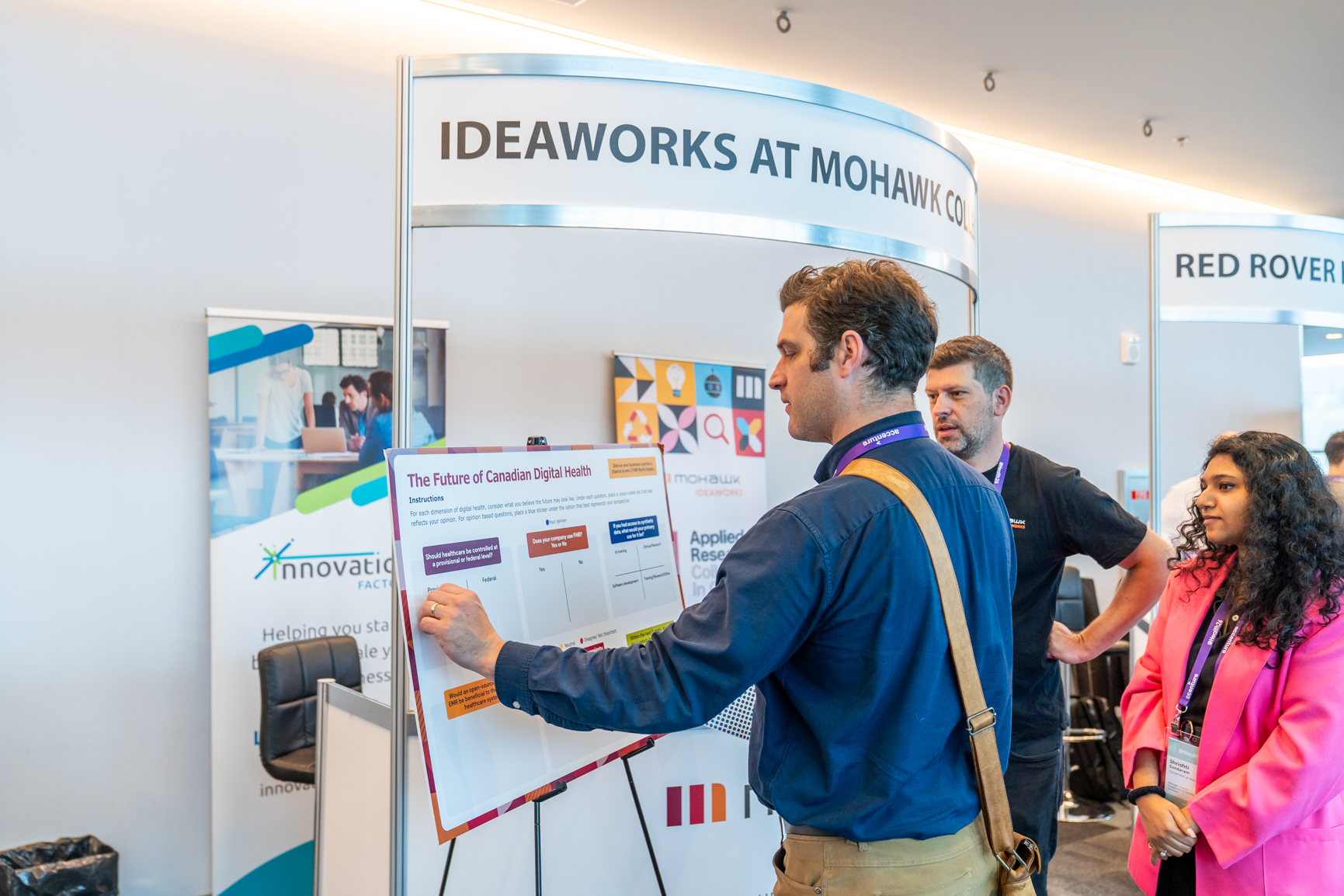
For academic institutions like Mohawk College, participation in Canada’s digital health community extends well beyond the classroom.
With a long history of applied research in digital health, the college has developed expertise in helping organizations turn ideas into practical solutions. Through IDEAWORKS, Mohawk College’s applied research and innovation hub in Hamilton, Ontario, businesses, non-profits and government organizations work with faculty, staff and students to address real-world challenges.
Spotlighting IDEAWORKS
At e-Health26 in Halifax, Fergus McKee, Manager, Digital Health Projects at Mohawk College IDEAWORKS, saw the conference as an opportunity for IDEAWORKS to bring that expertise to a broader Canadian audience.
“e-Health is a great platform to engage with the digital health community across Canada,” McKee says.
IDEAWORKS supports startups and small-to-medium enterprises (SMEs) with the technical expertise and capacity needed to advance their projects. McKee emphasized that the team includes full-time professionals with expertise spanning software development, design, DevOps and networking, working alongside students who gain valuable hands-on experience and prepare for careers in digital health.
Canada’s largest national digital health conference created in-person opportunities to support both sides of that work, with McKee emphasizing the value of being in the same room with existing contacts while creating new relationships that may not emerge through virtual meetings. “It gives us an opportunity to go and discuss some of the great work we’ve done, reach out to potential new clients and say, ‘Hey, we can help you,’ or foster connections with commercial partners.”
One unexpected encounter at e-Health26 illustrated that point. While at the Mohawk booth, McKee ran into someone he knew locally but had never realized worked in digital health. The chance meeting opened the door to a potential business collaboration – “It turned out we have what he needs, and he has what we need.”
Navigating a complex digital health landscape
The conversations taking place at e-Health also reflect how quickly the sector is evolving. Canada may be geographically large, McKee says, but the digital health community is relatively small and closely connected.
At e-Health, McKee notes that these connections translated into discussions about the technologies and challenges shaping the future of digital health.
The growing complexity of digital health projects that involve AI, integrations and robotics, places greater emphasis on security, privacy and trust. McKee notes that the starting point should always remain the problem being solved. Rather than beginning with a technology and looking for a use case, organizations should first identify the challenge and then determine whether AI or another emerging technology can contribute to the solution.
McKee also pointed to growing conversations around Canadian data sovereignty, including where data is stored and the stability of international technology partnerships. These considerations add another layer to the decisions organizations make when developing and implementing digital health solutions.
Connecting the conversations through interoperability
Many of these challenges come back to a central issue in digital health: interoperability.
FHIR North, taking place October 27-28, brings together professionals interested in advancing interoperability and reducing fragmentation across healthcare systems. The conference has evolved into an international virtual event, attracting participants from Canada and beyond.
The event includes two streams: FHIR Academy, focused on the business side of FHIR and interoperability, and Code Camp, designed for technical audiences and developers.
McKee described the conference as an opportunity to build knowledge rather than simply promote products, allowing participants to exchange ideas and take those insights back into their organizations. Digital Health Canada is an accredited partner for FHIR North, providing an opportunity for all eligible attendees to earn professional development credits toward designations like CPHIMS.
Creating local and national impact
All things considered, McKee notes that collaboration remains central to advancing digital health. Whether through academic institutions, industry partners or professional associations, greater sharing of knowledge and networking can help reduce fragmentation and create stronger outcomes.
The same principle applies locally. Mohawk College, McMaster University, healthcare organizations and private-sector partners form part of Hamilton’s digital health ecosystem, demonstrating how local collaboration can contribute to broader impact.
As McKee put it, a rising tide can lift all boats. For Canada’s digital health community, bringing people together, in-person at e-Health, or virtually, remains an important part of pushing innovation and moving the sector forward.
“The more we can do to work together, so we have a less fragmented system, I think is something that will benefit Canadians,” he says.
Learn more about FHIR North and register here.
Want to highlight your academic institution’s leadership in digital health? Book an Academic Kiosk and promote your school, program, and students to healthcare delivery decision-makers at e-Health27.